

Wednesday, May 22, 2013
The new Governor of Kajiado County (our project area) is David ole Nkedianye PhD. who is one of the original founding Board members of The Wildlife Foundation. Governor Nkedianye was able to attend the university with the help of The Wildlife Founation and he also is the author of the very important Land Use Master Plan for Kajiado County. Having Governor Nkedianye elected to the top spot of Kajiado's government is going to be a tremendous asset in helping to preserve and protect the wildlife and open-livestock grazing of the Naiorbi Nat. Park wildlife dispersal area.


Thursday, May 17, 2012
On 10 May 2012 Julius Kipng'etich, Dirctor of the Kenya Wildlife Service (KWS) said conflict with people has affected wildlife population and distribution, with one of the biggest wildebeest migrations in the world being compromised.
Kipng'etich said the wildebeest migration from and into the Nairobi National Park has been affected due to land use changes on the Athi-Kapiti plains. "The upcoming development of Konza city has also compromised the migration and distribution of numerous plains game species," he said.
Director Kipng'etich went on to say, "KWS is now looking into the possibility of easements with the proposed Wildlife Bill. Land owners will be educated on the value of the land inclusive of the wildlife on it. The government will then lease this land as wildlife space from the landowners, thereby enhancing its potential".
This Land Leasing promotion by KWS is most welcome.
Kipng'etich said the wildebeest migration from and into the Nairobi National Park has been affected due to land use changes on the Athi-Kapiti plains. "The upcoming development of Konza city has also compromised the migration and distribution of numerous plains game species," he said.
Director Kipng'etich went on to say, "KWS is now looking into the possibility of easements with the proposed Wildlife Bill. Land owners will be educated on the value of the land inclusive of the wildlife on it. The government will then lease this land as wildlife space from the landowners, thereby enhancing its potential".
This Land Leasing promotion by KWS is most welcome.
Wednesday, August 31, 2011
Maasai Demonstrate for Land-Use Master Plan
On 26 Aug.2011 hundreds of the Maasai community residents demonstrated their support for strong enforcement of the recently passed Land Use Master Plan (LUMP) for the private grazing lands South of Nairobi National Park. This locally driven law is the first ever land use plan adopted outside of any city in Kenya. Ogeli Ole Makui and David Ole Nkedianye (Photos by Ed Loosli) are to be given much of the credit over the last two years for getting this most important law passed. The Master Plan calls for a livestock and wildlife land-use policy and most importantly, it mandates that the smallest parcel size in the open lands is 60 acres. If enforced, this new Master Plan should greatly help in curtailing land
subdivisions and land speculation.


Saturday, July 30, 2011
Other beautiful cats of Nairobi Nat. Park
 Lions are the most famous of Nairobi Nat. Park's cats and their increasing numbers now are a refreshing change from the declines in lion numbers in other parts of East Africa. There are now over 30 lions in the Nairobi NP ecosystem and at the same time there are other, more elusive cats that frequent the Park and its environs. Ned Knocker took this wonderful photo of a serval cat in June. Also, caracal, civet and African wild-cats are present, but equally hard to spot. So many lions now inhabit the Park, that cheetahs have largely been pushed out of the Park into the open pastoral lands in the Park's wildlife dispersal area --- another good reason for protecting these vital private lands.
Tuesday, May 24, 2011
Rains bring lushness

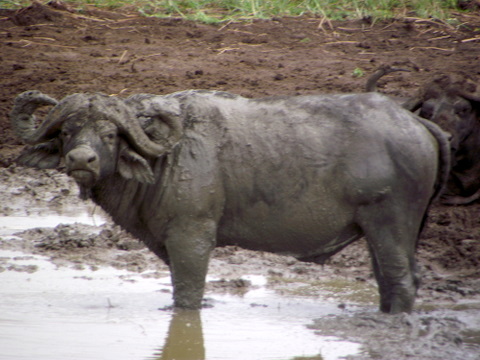 ......................This huge Cape Buffalo is in his element (mud) since brief rains have fallen. Zebra graze contentedly in the valley of the Empakasi River along the open southern boundary of Nairobi National Park. The zebra population in the ecosystem is still equal to numbers recorded in the 1970s. In the Nairobi NP wildlife dispersal area to the south, another successful set of Lease payment gatherings just took place, and now 43,000 savanna acres are under the protection of the Wildlife Conservation Lease Programme thanks to the co-operation of the local Maasai private land owners. Photos by Will Knocker.
Sunday, April 17, 2011
 Kate Maughling took this terrific photo (right) last week in Nairobi National Park.
Leopards are numorous in the Nairobi National Park ecosystem, but how numorous is a good question (possibly between 10 and 20) as leopards are extremely stealthy and often hunt only at night. What is known by a KWS study, however, is that lions often get blamed for the livestock kills actually made by leopards at night out in the important Nairobi National Park wildlife dispersal area, that is privately owned by Maasai pastoralists.
Kate Maughling took this terrific photo (right) last week in Nairobi National Park.
Leopards are numorous in the Nairobi National Park ecosystem, but how numorous is a good question (possibly between 10 and 20) as leopards are extremely stealthy and often hunt only at night. What is known by a KWS study, however, is that lions often get blamed for the livestock kills actually made by leopards at night out in the important Nairobi National Park wildlife dispersal area, that is privately owned by Maasai pastoralists.
Monday, March 7, 2011
Lions on the Increase
 Thanks to the photo by Dave McKelvie (right) we are able to see one of Nairobi National Park's prime attractions. While lion numbers are declining in many areas of East Africa, the lions here continue to increase their numbers in the ecosystem thanks to excellent co-operation with the local Maasai community, who are directly benefitting from the wildlife living on their land from the Wildlife Conservation Lease Programme. There are now approximately 30 lions in the Nairobi National Park ecosystem, up from only 7 in year 2003.
Friday, December 24, 2010
Rhinos thriving in Nairobi National Park
 To the right, in the distance, a cow rhino & calf graze on the plain below Impala Observation Point showing the spectacular rhino habit of Nairobi National Park. Will Knocker tells us that there are now at least 40 Black rhinos in NNP and 11 Northern White rhinos that have been translocated in from Lake Nakuru Park. Despite some bad news coming out of South Africa and stories of an upsurge in rhino poaching in other parts of Kenya, here in the Nairobi Nat. Park, a long-time sanctuary for the East African sub-species of Black (Browse) rhino -micheallii- things are going very well. The rhino calf pictured in this beautiful photo by Patrick Bourgeix is just one of many in the park, spelling out a bright future for this wondrous species.
Thursday, October 14, 2010
Maasai moran celebration outside Nairobi Nat. Park
 Over 300 young men were initiated at a very colorful "enkinosata Oo nkiri" ceremony taking place in the wildlife dispersal area South of Nairobi National Park. Almost 3/4 of these warriors are from families enrolled in our Wildlife Conservation Lease Programme, and we thank them and their enlightened parents for keeping their culture front and center along with the Maasai tradition of protecting wildlife on their lands.
 This is one of the most important graduation ceremonies for the moran as it signifies their entry into adulthood. The event takes place only once every 10 to 12 years and only men of a specific age set based on their date of circumcision can graduate. Young men are circumcised at any age but usually between 10 and 20.
Before the ceremony starts all participants are painted with red ochre including women, and a sacred bull is selected for the "enkinosata Oo nkiri" ceremony, which translates from Maa to English as “Eating of meat”. These wonderful photos were taken by Peter Greste.
This is one of the most important graduation ceremonies for the moran as it signifies their entry into adulthood. The event takes place only once every 10 to 12 years and only men of a specific age set based on their date of circumcision can graduate. Young men are circumcised at any age but usually between 10 and 20.
Before the ceremony starts all participants are painted with red ochre including women, and a sacred bull is selected for the "enkinosata Oo nkiri" ceremony, which translates from Maa to English as “Eating of meat”. These wonderful photos were taken by Peter Greste.
Saturday, September 4, 2010
40,000 acres near Nairobi N.P. protected
 As of September 2010, we have been able to add another 10,000 acres under the protection of the Wildlife Conservation Lease Programme. This brings a total of 40,000 acres (62 sq.miles) of the Nairobi Nat. Park dispersal area under land-use protection. Nairobi National Park is approximately 30,000 acres in size, so in effect, we have now been able to more than double the protected area of Kenya's first national park. Dozens of Maasai families, that have been on the "lease programme waiting list", have made this co-operative venture possible. The entire area looks beautiful and wildlife like big male lion "Ujonjo" are thriving. Photo by Will Knocker taken on 1 September 2010.
Monday, December 14, 2009
Leopards of Nairobi National Park
 Yumi Yamane, a zoologist from Kyoto University is researching leopards in NNP, specifically looking at the conservation of these elusive cats and at interaction between leopards and people living outside the Park.
Will Knocker reports that Yumi trapped and collared 2 female leopards in the Park in January 2009 and has been trying to keep up with them through radio signals & GPS readings showing their movements since then. KWS further reports a female with 3 cubs in the Langata Forest area of Nairobi National Park.
Yumi has positively identified at least 5 different males & estimates the entire Nairobi National Park leopard population at between 10-20. Having these elusive beauties so close to "civilization" is what helps makes Nairobi National Park so unique and special.
Yumi Yamane, a zoologist from Kyoto University is researching leopards in NNP, specifically looking at the conservation of these elusive cats and at interaction between leopards and people living outside the Park.
Will Knocker reports that Yumi trapped and collared 2 female leopards in the Park in January 2009 and has been trying to keep up with them through radio signals & GPS readings showing their movements since then. KWS further reports a female with 3 cubs in the Langata Forest area of Nairobi National Park.
Yumi has positively identified at least 5 different males & estimates the entire Nairobi National Park leopard population at between 10-20. Having these elusive beauties so close to "civilization" is what helps makes Nairobi National Park so unique and special.


Friday, September 25, 2009

This photo (right) illustrating the co-existance of wildlife, livestock and people in our project area south of Nairobi National Park was taken by a team of World Bank environmental and financial leaders who were on a project site-visit. They met several of the Maasai families in the Lease Program and saw first hand how wildlife on these important private lands are thriving. The grasses are severely dry so everyone is hoping the brief recent rains are a sign that the "short rains" might come early this year. Because of the severe drought, Nairobi NP and the Maasai lands close by are full of migrating wildlife because of the permanent water located in the Park and the Empakasi River, which marks the open un-fenced southern boundary of the Park. Paula Kahumbu reports sighting a single cheetah, which she judged to likely be a female, near Masai Gate looking very healthy. Let us hope there is an equally healthy male cheetah near by.
Sunday, December 7, 2008

Saturday, October 4, 2008
Kenya: Big Cats Roaring Back Into Nairobi Park Ecosystem................
The Kenya Wildlife Service and Friends of the Nairobi National Park (FoNNaP) staged a ceremony on August 21 at the main gate to the Nairobi National Park to celebrate the return of lions and other big cats to the Nairobi National Park.
The resurgence in the big cat population is the result of a successful Consolation Scheme now administered by FoNNaP and the Lease Programme funded and implimented by The Wildlife Foundation.
Conservationists and fans of the Nairobi National Park were jolted into action in 2003, when 11 lions were killed near the park. According to Inge Burchard, the chief scientist from FoNNaP for the park and the Kitengela ecosystem, this was because the pastoralists whose livestock had been killed by lions were not compensated when the Lion Endowment Fund ran out. Acting on her appeal, Alan Donovan, a co-founder of African Heritage offered to organise the First African Heritage Day at his house overlooking the park, to raise funds for the Call of the Lions. In 2004, 600 people arrived at his house on the original Kenya-Uganda steam train, with US ambassador Mark Bellamy and Carmelo Cocuzza of the European Investment Bank as special guests of honour. Since that time, there have been two more successful fundraisers held at the African Heritage House for the benefit of the lions and other big cats who inhabit the park.
Last year, Rift Valley Railways provided one of its new diesel engines with newly painted passenger cars for the several hundred guests who made the trip to the Athi Plains.
German ambassador Walter Lindner assisted in providing entertainment (by Eric Wainana and Ayub Ogada) for the occasion, and US ambassador Michael Ranneberger was the guest of honour. He expressed his government's support for the park and other projects in the wildlife sector amounting to $10.4 million between 2006 and 2010.
The Kenya Wildlife Service received $2.5 million last year to implement, over the next four years, management actions in support of its 10-year strategic plan. Some of these funds are invested directly in Nairobi Park.
It is one of the first parks in the KWS system to benefit from the SmartCard system.
KWS is also implementing the Nairobi National Park ecosystem management plan, which includes linkages with new US support for the Kitengela wildlife dispersal area, including another grant of $1.6 million this year provided by USAID.
If the park is to retain its unique character and biodiversity, it is essential that migratory routes continue to run through it.
FoNNaP has set a goal of Ksh50 million ($714,000) for a new Lion Endowment Fund to make it self-sustaining -- it will utilise only the interest on the fund to make compensation payments. However, it will take much more than that to restore the wildlife corridors.
There are many potential donors willing and able to assist as is exemplified by the wide support for the Call of the Lions.
Proceeds from the African Heritage Days also go to the Lion Endowment Fund.
US ambassador Mr Ranneberger says the Call of the Lions is a model programme as it involves both public and private sources as well as individuals who may offer their support while they pay homage to the rich environmental, wildlife and cultural heritage of the African continent. At the last African Heritage Day, Mr Ranneberger underscored the continuing US commitment to help preserve Kenya's rich wildlife heritage and, in particular, the Nairobi National Park. He urged everyone to enthusiastically support this effort, adding, "I am sure that, one of these days, we will hear the lions roar their approval."
The next African Heritage Day, said Mr Donovanwill combine the public opening ceremony of the Murumbi Peace Memorial at Nairobi's City Park with the opening of a new gate to Nairobi National Park by the Kenya Wildlife Service on Mombasa Road.
Tuesday, March 4, 2008
Lions, lots and lots...
Report from Dave McKelvie, 28 January 2008. Nairobi National Park's main lion pride has a big male, 3 females, teenagers and 2 little cubs. They seem to be happy to stay as game plentiful. 2 young males wander all over Nairobi National Park, last saw them near Cheetah gate with a kill just a couple of weeks ago. Just after Christmas, 2 young males were at burning site, a single female near water crossing trying to join pride but was chased, another pride with big male near marker 4 and then another 2 females at marker number 5, all seen in one trip through the Park. Also hear another pride near hippo pool of about 6. Lion numbers have now increased to approximately 19.  Nairobi National Park has been transformed since the Kenya Wildlife Service decided to burn it, after 5 years+ of dead grass. It's now herds of buffalo with young, must be around 100+, eland with young 50+, kongoni with young 100+, zebra with young 100+; I came across a herd of 26 giraffe too. I also saw steinbuck. Black Rhinos I see everyday and came across 3 this morning just after 6am. I have to say and this is imperative, prescribed burning has rejuvenated the park and KWS must plan to do this every so often. KWS is to be commended for the grass burning and making Nairobi Park a place visitors can come and see game again.
Cheetah have been sighted, a huge male cheetah near Cheetah gate, 3 cheetahs just near Masai gate and I personally saw a big one near burning site just before Christmas. I also hear that Hopcraft farm had 18 cheetahs last year and hopefully, now that grass has been burnt, they will come back.
Lots of ostrich with young, too. Impala herd of about 20 with young seen, Tommies and Grants gazelles slowly coming back since the big prescribed burn. 2 Serval cats hang around marker number 7 and are seen often. Wildebeest were sighted Sunday coming into the Park near Cheetah gate. Unfortunately, we recently had domestic dogs in Park, which were reported to KWS and they tried to get them, but eventually they were killed by lions, wandered down a road right into a lion pride.
Nairobi National Park has been transformed since the Kenya Wildlife Service decided to burn it, after 5 years+ of dead grass. It's now herds of buffalo with young, must be around 100+, eland with young 50+, kongoni with young 100+, zebra with young 100+; I came across a herd of 26 giraffe too. I also saw steinbuck. Black Rhinos I see everyday and came across 3 this morning just after 6am. I have to say and this is imperative, prescribed burning has rejuvenated the park and KWS must plan to do this every so often. KWS is to be commended for the grass burning and making Nairobi Park a place visitors can come and see game again.
Cheetah have been sighted, a huge male cheetah near Cheetah gate, 3 cheetahs just near Masai gate and I personally saw a big one near burning site just before Christmas. I also hear that Hopcraft farm had 18 cheetahs last year and hopefully, now that grass has been burnt, they will come back.
Lots of ostrich with young, too. Impala herd of about 20 with young seen, Tommies and Grants gazelles slowly coming back since the big prescribed burn. 2 Serval cats hang around marker number 7 and are seen often. Wildebeest were sighted Sunday coming into the Park near Cheetah gate. Unfortunately, we recently had domestic dogs in Park, which were reported to KWS and they tried to get them, but eventually they were killed by lions, wandered down a road right into a lion pride.

 Nairobi National Park has been transformed since the Kenya Wildlife Service decided to burn it, after 5 years+ of dead grass. It's now herds of buffalo with young, must be around 100+, eland with young 50+, kongoni with young 100+, zebra with young 100+; I came across a herd of 26 giraffe too. I also saw steinbuck. Black Rhinos I see everyday and came across 3 this morning just after 6am. I have to say and this is imperative, prescribed burning has rejuvenated the park and KWS must plan to do this every so often. KWS is to be commended for the grass burning and making Nairobi Park a place visitors can come and see game again.
Cheetah have been sighted, a huge male cheetah near Cheetah gate, 3 cheetahs just near Masai gate and I personally saw a big one near burning site just before Christmas. I also hear that Hopcraft farm had 18 cheetahs last year and hopefully, now that grass has been burnt, they will come back.
Lots of ostrich with young, too. Impala herd of about 20 with young seen, Tommies and Grants gazelles slowly coming back since the big prescribed burn. 2 Serval cats hang around marker number 7 and are seen often. Wildebeest were sighted Sunday coming into the Park near Cheetah gate. Unfortunately, we recently had domestic dogs in Park, which were reported to KWS and they tried to get them, but eventually they were killed by lions, wandered down a road right into a lion pride.
Nairobi National Park has been transformed since the Kenya Wildlife Service decided to burn it, after 5 years+ of dead grass. It's now herds of buffalo with young, must be around 100+, eland with young 50+, kongoni with young 100+, zebra with young 100+; I came across a herd of 26 giraffe too. I also saw steinbuck. Black Rhinos I see everyday and came across 3 this morning just after 6am. I have to say and this is imperative, prescribed burning has rejuvenated the park and KWS must plan to do this every so often. KWS is to be commended for the grass burning and making Nairobi Park a place visitors can come and see game again.
Cheetah have been sighted, a huge male cheetah near Cheetah gate, 3 cheetahs just near Masai gate and I personally saw a big one near burning site just before Christmas. I also hear that Hopcraft farm had 18 cheetahs last year and hopefully, now that grass has been burnt, they will come back.
Lots of ostrich with young, too. Impala herd of about 20 with young seen, Tommies and Grants gazelles slowly coming back since the big prescribed burn. 2 Serval cats hang around marker number 7 and are seen often. Wildebeest were sighted Sunday coming into the Park near Cheetah gate. Unfortunately, we recently had domestic dogs in Park, which were reported to KWS and they tried to get them, but eventually they were killed by lions, wandered down a road right into a lion pride.
Saturday, February 9, 2008
African Wild Dogs return

When African wild dogs reappeared in the Maasai ow ned dispersal area of Nairobi National Park late in 2006, there was great excitement in the scientific community who had not seen these highly endangered predators in perhaps 20 years. The wild dogs have been roaming far and wide and accurate counts are hard to come by, but there are now approximately 25 wild dogs in the Nairobi NP dispersal area and then perhaps another 25 farther away in the region. The wild dogs, as is their nature, have been eating wild game, but also lots of domestic sheep and goats, so funding is desperately needed for the Predator Consolation Program to help compensate the Maasai livestock owners for their losses. The Friends of Nairobi Nat. Park (FoNNaP) are now managing this important wildlife conservation program.
Lions are also making back gains from their low point in 2003. A pride of 13 was recently seen in Nairobi NP and another pride of 6, including the big male "Ujongo" was also observed. This pride includes 2 adult lionesses and at least 3 adorable cubs approximately 10 months old. Two other adult males are now outside the Park to the southwest. At Hippo Pools which is located on the open southern Park boundary, a crocodile killed a cow and another croc killed a calf that had come down to the Empakasi River to drink. Welcome to the wilds in Nairobi's back yard. Thanks to the recent large prescribed burn by the Kenya Wildlife Service (KWS), hundreds of zebra are in the Park and many have new foals. Also spotted lately have been hartebeest, eland, wildebeest, waterbucks and giraffe in large numbers. Please help our worthy conservation efforts and the Maasai people who make it all possible.
ned dispersal area of Nairobi National Park late in 2006, there was great excitement in the scientific community who had not seen these highly endangered predators in perhaps 20 years. The wild dogs have been roaming far and wide and accurate counts are hard to come by, but there are now approximately 25 wild dogs in the Nairobi NP dispersal area and then perhaps another 25 farther away in the region. The wild dogs, as is their nature, have been eating wild game, but also lots of domestic sheep and goats, so funding is desperately needed for the Predator Consolation Program to help compensate the Maasai livestock owners for their losses. The Friends of Nairobi Nat. Park (FoNNaP) are now managing this important wildlife conservation program.
Lions are also making back gains from their low point in 2003. A pride of 13 was recently seen in Nairobi NP and another pride of 6, including the big male "Ujongo" was also observed. This pride includes 2 adult lionesses and at least 3 adorable cubs approximately 10 months old. Two other adult males are now outside the Park to the southwest. At Hippo Pools which is located on the open southern Park boundary, a crocodile killed a cow and another croc killed a calf that had come down to the Empakasi River to drink. Welcome to the wilds in Nairobi's back yard. Thanks to the recent large prescribed burn by the Kenya Wildlife Service (KWS), hundreds of zebra are in the Park and many have new foals. Also spotted lately have been hartebeest, eland, wildebeest, waterbucks and giraffe in large numbers. Please help our worthy conservation efforts and the Maasai people who make it all possible.
 ned dispersal area of Nairobi National Park late in 2006, there was great excitement in the scientific community who had not seen these highly endangered predators in perhaps 20 years. The wild dogs have been roaming far and wide and accurate counts are hard to come by, but there are now approximately 25 wild dogs in the Nairobi NP dispersal area and then perhaps another 25 farther away in the region. The wild dogs, as is their nature, have been eating wild game, but also lots of domestic sheep and goats, so funding is desperately needed for the Predator Consolation Program to help compensate the Maasai livestock owners for their losses. The Friends of Nairobi Nat. Park (FoNNaP) are now managing this important wildlife conservation program.
Lions are also making back gains from their low point in 2003. A pride of 13 was recently seen in Nairobi NP and another pride of 6, including the big male "Ujongo" was also observed. This pride includes 2 adult lionesses and at least 3 adorable cubs approximately 10 months old. Two other adult males are now outside the Park to the southwest. At Hippo Pools which is located on the open southern Park boundary, a crocodile killed a cow and another croc killed a calf that had come down to the Empakasi River to drink. Welcome to the wilds in Nairobi's back yard. Thanks to the recent large prescribed burn by the Kenya Wildlife Service (KWS), hundreds of zebra are in the Park and many have new foals. Also spotted lately have been hartebeest, eland, wildebeest, waterbucks and giraffe in large numbers. Please help our worthy conservation efforts and the Maasai people who make it all possible.
ned dispersal area of Nairobi National Park late in 2006, there was great excitement in the scientific community who had not seen these highly endangered predators in perhaps 20 years. The wild dogs have been roaming far and wide and accurate counts are hard to come by, but there are now approximately 25 wild dogs in the Nairobi NP dispersal area and then perhaps another 25 farther away in the region. The wild dogs, as is their nature, have been eating wild game, but also lots of domestic sheep and goats, so funding is desperately needed for the Predator Consolation Program to help compensate the Maasai livestock owners for their losses. The Friends of Nairobi Nat. Park (FoNNaP) are now managing this important wildlife conservation program.
Lions are also making back gains from their low point in 2003. A pride of 13 was recently seen in Nairobi NP and another pride of 6, including the big male "Ujongo" was also observed. This pride includes 2 adult lionesses and at least 3 adorable cubs approximately 10 months old. Two other adult males are now outside the Park to the southwest. At Hippo Pools which is located on the open southern Park boundary, a crocodile killed a cow and another croc killed a calf that had come down to the Empakasi River to drink. Welcome to the wilds in Nairobi's back yard. Thanks to the recent large prescribed burn by the Kenya Wildlife Service (KWS), hundreds of zebra are in the Park and many have new foals. Also spotted lately have been hartebeest, eland, wildebeest, waterbucks and giraffe in large numbers. Please help our worthy conservation efforts and the Maasai people who make it all possible.
Saturday, January 5, 2008
Happy New Year from Nairobi National Park
 With the chaos resulting from the recent disputed elections, perhaps the calmest place in Kenya was Nairobi National Park, usually one of the wildest places around. We welcome all who can view this new web-site/blog and hope you will join our efforts to help conserve the entire Nairobi National Park ecosystem from the forested lands of the NorthWest part of the Park to the rolling semi-arid savanna grasslands in the South largely owned by our Maasai partners, who share our devotion to
 the conservation of the entire ecosystem.
Nairobi National Park is one of the most popular and successful of Kenya's protected areas. In fact, it is so successful that some of the income derived from tourist revenue contributes to the support of other important protected areas that do not have a large tourist base.
the conservation of the entire ecosystem.
Nairobi National Park is one of the most popular and successful of Kenya's protected areas. In fact, it is so successful that some of the income derived from tourist revenue contributes to the support of other important protected areas that do not have a large tourist base.
Subscribe to:
Posts (Atom)