Contact addresses:

Edward Loosli - Chairman, The Wildlife Foundation - Kenya
President, The Wildlife Trust - U.S.A.: Ed-L@sbcglobal.net

Irina Katherina Wandera - Office Manager:
ikwandera@gmail.com

John Sinkeet Solonka - Field Director: sinkeet1@yahoo.co.uk


Send tax-deductable checks to:

The Wildlife Trust
120 La Bolsa Road
Walnut Creek, California USA 94598


Wildlife Conservation Lease Program

Thanks to the generous contributions from The Nature Conservancy (USA), the Kenya Wildlife Service and the contribution (Sept. 2009) from the Global Environment Facility through a World Bank/GEF Project, 55,000 acres of savanna grasslands and more than 380 Maasai families are living under the environmental protection of the Wildlife Conservation Lease Program managed by The Wildlife Foundation, up from 8,600 acres in 2007. Nairobi Nat. Park is approximately 28,500 acres, so this expansion of the Lease Program throughout the Nairobi National Park wildlife dispersal area almost triples the size of the ecosystem's protected habitat. Under the written terms of the Wildlife Conservation Lease contract, in return for a contribution of $4 per acre per year, individual Maasai landowners living outside the open un-fenced southern boundary of Nairobi N.P. agree to keep their lands un-fenced and un-cultivated. The landowners further agree to manage their land for wildlife, including lions, and sustainable livestock grazing, the traditional pastoral way of life that has well served both wildlife and the Maasai people for generations. ***** Please support these hard working people and the wildlife that share their land ******


Tuesday, May 24, 2011

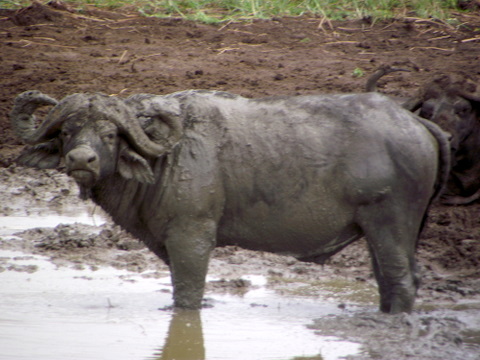
Rains bring lushness

......................This huge Cape Buffalo is in his element (mud) since brief rains have fallen. Zebra graze contentedly in the valley of the Empakasi River along the open southern boundary of Nairobi National Park. The zebra population in the ecosystem is still equal to numbers recorded in the 1970s. In the Nairobi NP wildlife dispersal area to the south, another successful set of Lease payment gatherings just took place, and now 43,000 savanna acres are under the protection of the Wildlife Conservation Lease Programme thanks to the co-operation of the local Maasai private land owners. Photos by Will Knocker.

Sunday, April 17, 2011

Kate Maughling took this terrific photo (right) last week in Nairobi National Park. Leopards are numorous in the Nairobi National Park ecosystem, but how numorous is a good question (possibly between 10 and 20) as leopards are extremely stealthy and often hunt only at night. What is known by a KWS study, however, is that lions often get blamed for the livestock kills actually made by leopards at night out in the important Nairobi National Park wildlife dispersal area, that is privately owned by Maasai pastoralists.

Monday, March 7, 2011

Lions on the Increase

Thanks to the photo by Dave McKelvie (right) we are able to see one of Nairobi National Park's prime attractions. While lion numbers are declining in many areas of East Africa, the lions here continue to increase their numbers in the ecosystem thanks to excellent co-operation with the local Maasai community, who are directly benefitting from the wildlife living on their land from the Wildlife Conservation Lease Programme. There are now approximately 30 lions in the Nairobi National Park ecosystem, up from only 7 in year 2003.

Friday, December 24, 2010

Rhinos thriving in Nairobi National Park

To the right, in the distance, a cow rhino & calf graze on the plain below Impala Observation Point showing the spectacular rhino habit of Nairobi National Park. Will Knocker tells us that there are now at least 40 Black rhinos in NNP and 11 Northern White rhinos that have been translocated in from Lake Nakuru Park. Despite some bad news coming out of South Africa and stories of an upsurge in rhino poaching in other parts of Kenya, here in the Nairobi Nat. Park, a long-time sanctuary for the East African sub-species of Black (Browse) rhino -micheallii- things are going very well. The rhino calf pictured in this beautiful photo by Patrick Bourgeix is just one of many in the park, spelling out a bright future for this wondrous species.

Thursday, October 14, 2010

Maasai moran celebration outside Nairobi Nat. Park

Over 300 young men were initiated at a very colorful "enkinosata Oo nkiri" ceremony taking place in the wildlife dispersal area South of Nairobi National Park. Almost 3/4 of these warriors are from families enrolled in our Wildlife Conservation Lease Programme, and we thank them and their enlightened parents for keeping their culture front and center along with the Maasai tradition of protecting wildlife on their lands. This is one of the most important graduation ceremonies for the moran as it signifies their entry into adulthood. The event takes place only once every 10 to 12 years and only men of a specific age set based on their date of circumcision can graduate. Young men are circumcised at any age but usually between 10 and 20. Before the ceremony starts all participants are painted with red ochre including women, and a sacred bull is selected for the "enkinosata Oo nkiri" ceremony, which translates from Maa to English as “Eating of meat”. These wonderful photos were taken by Peter Greste.

Saturday, September 4, 2010

40,000 acres near Nairobi N.P. protected

As of September 2010, we have been able to add another 10,000 acres under the protection of the Wildlife Conservation Lease Programme. This brings a total of 40,000 acres (62 sq.miles) of the Nairobi Nat. Park dispersal area under land-use protection. Nairobi National Park is approximately 30,000 acres in size, so in effect, we have now been able to more than double the protected area of Kenya's first national park. Dozens of Maasai families, that have been on the "lease programme waiting list", have made this co-operative venture possible. The entire area looks beautiful and wildlife like big male lion "Ujonjo" are thriving. Photo by Will Knocker taken on 1 September 2010.

Monday, December 14, 2009

Leopards of Nairobi National Park

Yumi Yamane, a zoologist from Kyoto University is researching leopards in NNP, specifically looking at the conservation of these elusive cats and at interaction between leopards and people living outside the Park. Will Knocker reports that Yumi trapped and collared 2 female leopards in the Park in January 2009 and has been trying to keep up with them through radio signals & GPS readings showing their movements since then. KWS further reports a female with 3 cubs in the Langata Forest area of Nairobi National Park. Yumi has positively identified at least 5 different males & estimates the entire Nairobi National Park leopard population at between 10-20. Having these elusive beauties so close to "civilization" is what helps makes Nairobi National Park so unique and special.